
Works · Novel · 1845
Varney the Vampire
by James Malcolm Rymer or Thomas Peckett Prest (attribution below)
First appeared 1845–1847 in Weekly penny parts (no periodical title)
Nocturne plate · illustration (AI-generated, 2026)
Full title: Varney the Vampyre; or, The Feast of Blood
Synopsis
At midnight, in a hailstorm, a gaunt figure with long nails and fangs forces a window of Bannerworth Hall and feeds on the young Flora Bannerworth. Her brother Henry, her fiance Charles Holland and a circle of friends hunt the intruder and quarrel over whether a vampire is possible at all. Meanwhile a polite stranger, Sir Francis Varney, whose face matches the family portrait, makes an offer for the failing house. The serial then sprawls through duels, mobs, forged papers and hundreds of chapters, following a vampire who grows weary of what he is.
It is perfectly white—perfectly bloodless. The eyes look like polished tin; the lips are drawn back, and the principal feature next to those dreadful eyes is the teeth—the fearful looking teeth
Attribution and scope
Issued without an author’s name. Usually attributed to James Malcolm Rymer, sometimes to Thomas Peckett Prest, and often described as their joint work; Helen Smith’s bibliographic study of Lloyd’s advertisements and Bleiler’s stylistic comparison favour Rymer.
Facts
- Varney appeared as a penny serial published by Edward Lloyd, begun in 1845 and run for about two years, then issued as a book in 1847 (with a preface) and again in 1853. The restored Gutenberg text counts 232 chapters, though its table of contents runs to CCXXXVII because of misnumbering in the print.[1][2]
- The serial carried no author’s name. A Lloyd’s Weekly London Newspaper advertisement in September 1845 called it the work of the author of Don Caesar de Bazan; in 1846 it was advertised as by the author of Stella and of Ada, titles that Helen Smith assigns to Rymer. Smith adds that E. F. Bleiler’s 1972 Dover edition first drew attention to stylistic differences between Rymer and Prest.[3]
- The British Library calls it ‘the first vampire story where the vampire had fangs or sharpened teeth’. The first chapter does describe the intruder’s teeth as ‘projecting like those of some wild animal, hideously, glaringly white, and fang-like’.[2][1]
- Helen Smith writes that Edward Lloyd is reported to have paid his authors ten shillings for each weekly instalment, and that, according to Lloyd’s later editor Thomas Catling, Rymer was sometimes at work on ten serials or stories at once.[3]
Setting
Early eighteenth century by the preface’s own date (it says Varney’s death was reported in the public prints ‘for the year 1713’); the present-day action is not dated in the text[1]
- Bannerworth Hall
- a house in the English country
- Mount Vesuvius
Themes
Notes on dates 3 notes on disputed dates and attribution
- Authorship: Gutenberg’s transcriber says it is ‘generally considered to have been co-written by’ Rymer and Prest. Helen Smith concludes Rymer wrote it (advertisements of 1845-46 plus Bleiler’s style analysis), an inference rather than an authorial statement. Rymer is listed first, Prest second.
- Spelling of the title: the title page and headings use ‘Vampyre’, the 1853 wrapper ‘Vampire’. The full title here keeps ‘Vampyre’; the short title uses ‘Vampire’.
- Chapter count: Gutenberg counts 232; the contents list runs to 237 because of misnumbering in the print.
Threads
Threads in
- Descends from The Vampyre 1819
Sam George calls Polidori’s aristocratic vampire a figure ‘later reincarnated as Sir Frances Varney’, and notes that Varney alone among later vampires keeps Polidori’s link between the vampire and the moon through repeated lunar resurrections.[4]
Threads out
No sourced relation from a later work on this timeline is recorded.
Contemporaries
Works on the timeline that first appeared within three years of 1845, and the other writers alive when Varney the Vampire appeared (ages computed from sourced dates).
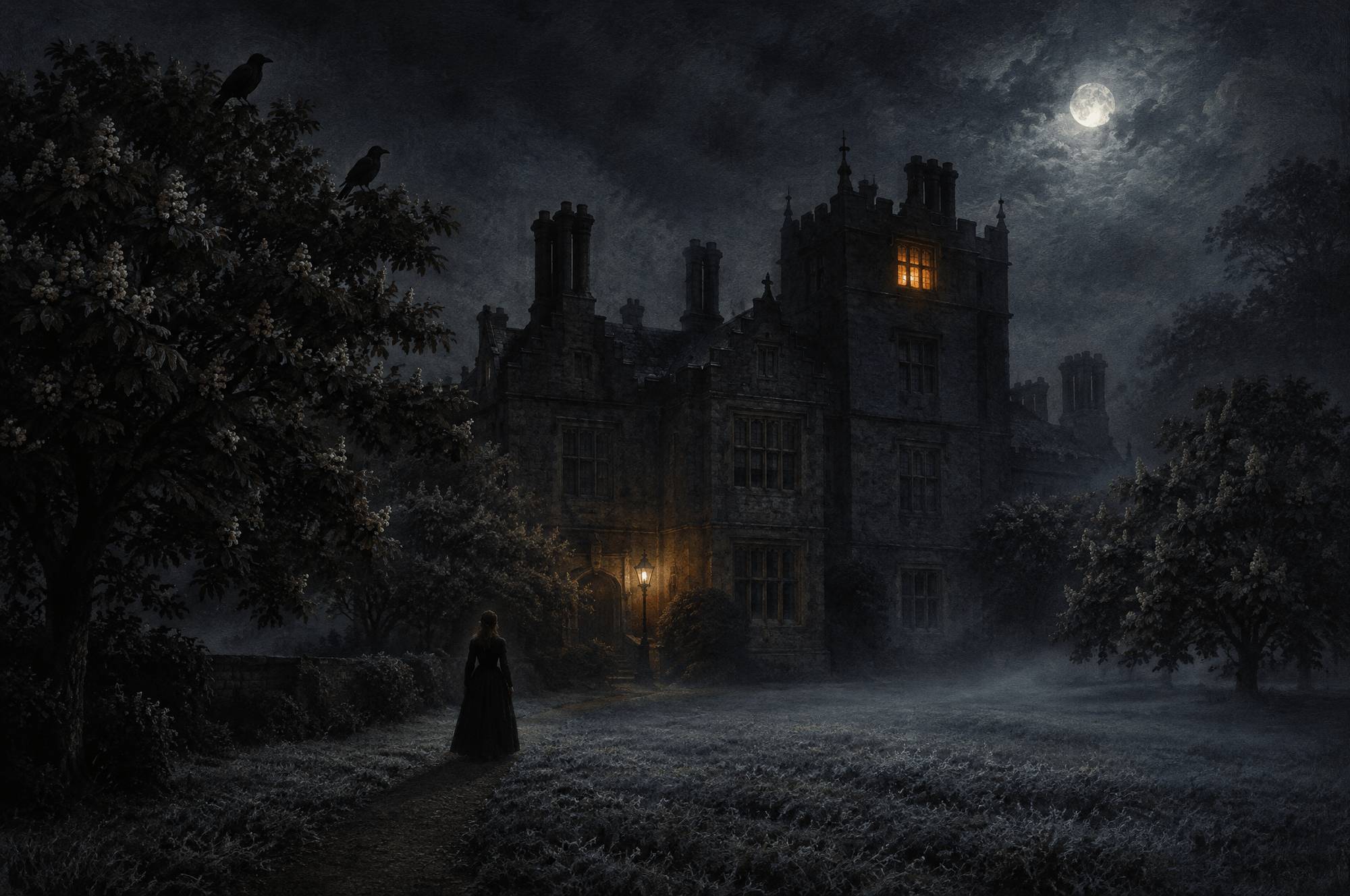
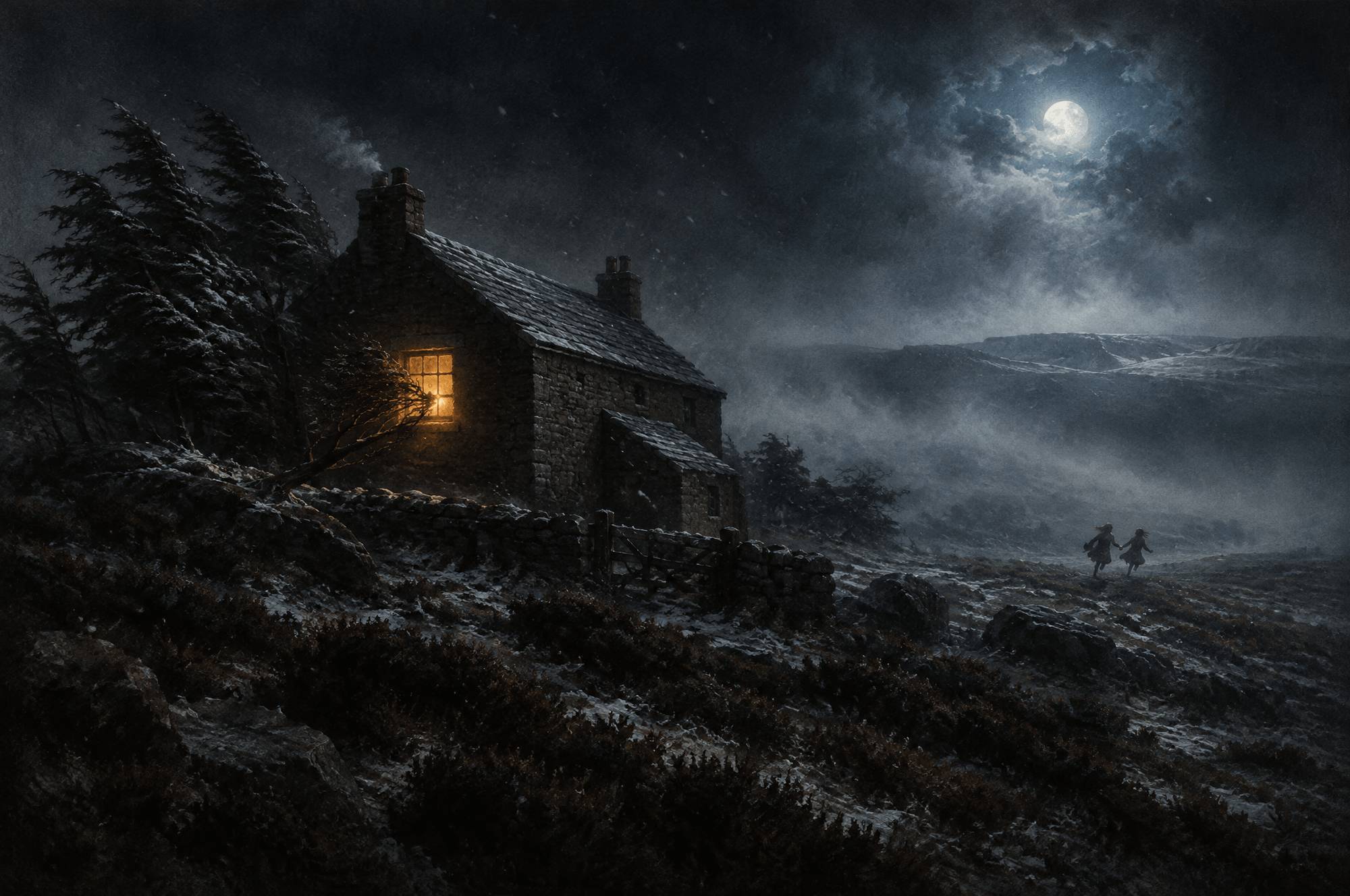
Thumbnails: Nocturne plates · illustration (AI-generated, 2026).
Alive at first appearance (1845)
Where a date is known only to the month or year, an age is given as the two values it could be.
- Mary Shelley 47 or 48
- Edgar Allan Poe 35 or 36
- Charlotte Brontë 28 or 29
- Emily Brontë 26 or 27
- Wilkie Collins 20 or 21
- Sheridan Le Fanu 30 or 31
- Henry James 1 or 2
Sources
- Varney the Vampyre; or, the Feast of Blood (Project Gutenberg ebook 14833; text of the 1847 volume edition, with transcriber's notes). Project Gutenberg. Accessed 2026-10-09.
- 'Spine-tingling' stories in the 'blood-curdling' British Library (notes Varney, London: E. Lloyd, 1845-47, and the fangs claim). British Library. Accessed 2026-10-09.
- Helen R. Smith, 'New Light on Sweeney Todd, Thomas Peckett Prest, James Malcolm Rymer and Elizabeth Caroline Grey' (Jarndyce; bibliographic study of Lloyd's penny bloods). edwardlloyd.org (Jarndyce). Accessed 2026-10-09.
- Sam George, 'Fantasmagoria: Polidori's Vampyre from theatricals to vampire-slaying kits'. University of Hertfordshire Research Archive. Accessed 2026-10-09.