
Works · Novel · 1890
Dorian Gray
by Oscar Wilde
First appeared Jul 1890 in one issue of Lippincott's Monthly Magazine (July 1890 issue)
Nocturne plate · illustration (AI-generated, 2026)
Full title: The Picture of Dorian Gray
Synopsis
In a London studio the painter Basil Hallward finishes a portrait of Dorian Gray, a young man of extraordinary beauty. Lord Henry Wotton, who sits watching, tells Dorian that youth is the only thing worth having, and Dorian, looking at the canvas, wishes that the picture might grow old while he stays as he is. The wish seems to be granted. Dorian takes up the pleasures Lord Henry preaches, and treats the people who love him badly, while the portrait hidden at home alters with every cruelty. Wilde sets the cult of beauty against conscience and asks what a perfect face is paid for with.
If it were only the other way! If it were I who was to be always young, and the picture that was to grow old! For that—for that—I would give everything!
Facts
- The book is longer than the magazine story. The Lippincott’s text of July 1890 runs to 13 chapters; the April 1891 Ward, Lock edition has a Preface and 20 chapters, which a bookseller’s catalogue describes as six new chapters added to the revised text.[1][5][3]
- Before it was printed, Lippincott’s editor J. M. Stoddart removed about 500 words, softening phrases such as ‘with far more romance of feeling than a man should ever give to a friend’ to ‘... than a man usually gives to a friend’.[7]
- The novel was commissioned at a dinner at the Langham Hotel, London, on or about 30 August 1889, at which Stoddart also commissioned The Sign of the Four from Arthur Conan Doyle. Doyle remembered that Wilde ‘towered above us all’ and called it ‘a golden evening’.[4][2][8]
Setting
Late-Victorian London and its suburbs; no year is given[5]
- London
- Basil Hallward’s studio
- Selby Royal
Themes
Notes on dates 3 notes on disputed dates and attribution
- Date of the magazine: the July 1890 number (Wikisource, ACD Encyclopedia); one bookseller and Wikipedia say it was printed or appeared on 20 June 1890. The month is shown.
- Number of chapters added in 1891: sources say five (New Republic) or six (Bauman); 13 plus six is 19, so a chapter must also have been divided to reach 20. The note says 13 to 20 with no count of new chapters.
- The Lippincott dinner: Doyle did not record the date; 30 August 1889 is inferred from his diary entry and Stoddart’s letter of that day.
Threads
Threads in
- A critic's reading links it to Melmoth the Wanderer 1820
A critic’s reading, not a statement by Wilde: a Dublin Review of Books essay finds Maturin’s legacy in the work of his grand-nephew Wilde, ‘particularly’ in Dorian Gray, and notes that after prison Wilde took the name Melmoth.[9]
- Shares an origin with Sherlock Holmes 1887
Dorian Gray and The Sign of the Four were both commissioned by J. M. Stoddart for Lippincott’s at the same dinner on or about 30 August 1889.[4][2]
Threads out
No sourced relation from a later work on this timeline is recorded.
Contemporaries
Works on the timeline that first appeared within three years of 1890, and the other writers alive when Dorian Gray appeared (ages computed from sourced dates).
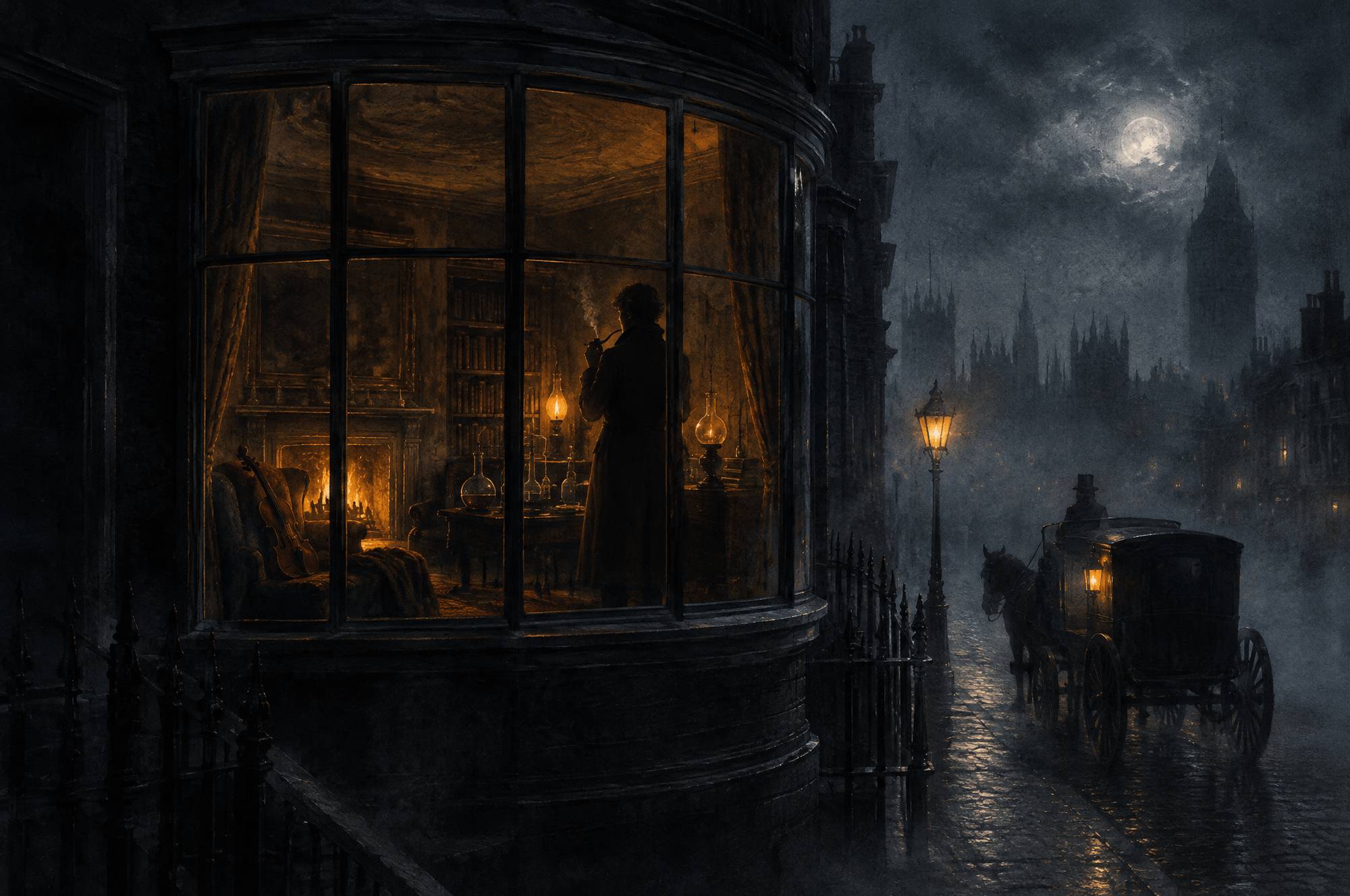
Thumbnails: Nocturne plates · illustration (AI-generated, 2026).
Alive at first appearance (Jul 1890)
Sources
- Lippincott's Monthly Magazine, Vol. 46, July 1890: The Picture of Dorian Gray (13 chapters; J. B. Lippincott, Philadelphia; copyright Melville Philips 1890). Wikisource (transcription of the magazine). Accessed 2026-10-09.
- Lippincott's Monthly Magazine, Arthur Conan Doyle Encyclopedia. Arthur Conan Doyle Encyclopedia. Accessed 2026-10-09.
- The Picture of Dorian Gray, first edition (Ward, Lock, April 1891), with Lippincott's first-appearance notes; dealer description. Bauman Rare Books. Accessed 2026-10-09.
- Borrowed Sins (account of the Lippincott dinner, quoting Doyle's diary and Stoddart's letter of 30 August 1889). Arthur Conan Doyle Encyclopedia. Accessed 2026-10-09.
- The Picture of Dorian Gray (ebook 174; Preface and 20 chapters). Project Gutenberg. Accessed 2026-10-09.
- Oscar Wilde Chronology. The Victorian Web. Accessed 2026-10-09.
- In search of the real 'Dorian Gray' (review of Frankel's annotated, uncensored edition). The New Republic. Accessed 2026-10-09.
- Arthur Conan Doyle and Oscar Wilde (account of the Langham dinner). CrimeReads. Accessed 2026-10-09. Pointer source (tier 3).
- A Literary Terrorist (on Maturin's Melmoth the Wanderer and its legacy). Dublin Review of Books. Accessed 2026-10-09.