
Works · Novella · 1895
The Time Machine
by H. G. Wells
First appeared Jan–May 1895 in The New Review
Nocturne plate · illustration (AI-generated, 2026)
Full title: The Time Machine: An Invention
Synopsis
At a Thursday dinner, an inventor whom the narrator can only call the Time Traveller shows his guests a small model that vanishes into tomorrow. A week later he staggers in, bruised and starving, to tell where the full-size machine has taken him. In the year 802,701 he finds the gentle, childlike Eloi playing in ruined gardens, and learns that pale creatures called Morlocks tend machinery underground and prey on them by night. The machine has been dragged into a Morlock burrow, and he must get it back. Beyond that lies a darker journey toward the end of the Earth.
It seemed to me that I had happened upon humanity upon the wane. The ruddy sunset set me thinking of the sunset of mankind.
Facts
- Wells never names his protagonist: the narrator introduces him as ‘the Time Traveller (for so it will be convenient to speak of him)’, and the destination of his main journey is stated in the text as the year Eight Hundred and Two Thousand Seven Hundred and One, A.D.[2]
- The tale ran in The New Review from January to May 1895, and two different book texts followed the same year: the first book edition came from Henry Holt in New York, and the London Heinemann edition is the one the Science Fiction Encyclopedia names as the preferred text.[1]
- The Science Fiction Encyclopedia reads the Eloi and the Morlocks as a powerful rendering of the implications of Social Darwinism, and the Eloi’s Eden as a harsh corrective to William Morris’s News from Nowhere.[1]
Setting
A Victorian dinner-party present, then the year A.D. 802,701[2]
- a house in Richmond (the Time Traveller’s), London area
- the Thames valley in the far future
- the Palace of Green Porcelain
- a dying shore under a red sun
Themes
Notes on dates 1 note on disputed dates and attribution
- Order and dates of the two 1895 book editions: the SF Encyclopedia confirms Holt (New York) as ‘first book edition’ and Heinemann (London) as the preferred text, both 1895, without days. Only the year is shown.
Threads
Threads in
No sourced relation to an earlier work is recorded.
Threads out
No sourced relation from a later work on this timeline is recorded.
Contemporaries
Works on the timeline that first appeared within three years of 1895, and the other writers alive when The Time Machine appeared (ages computed from sourced dates).
-
-
-
-
-

-

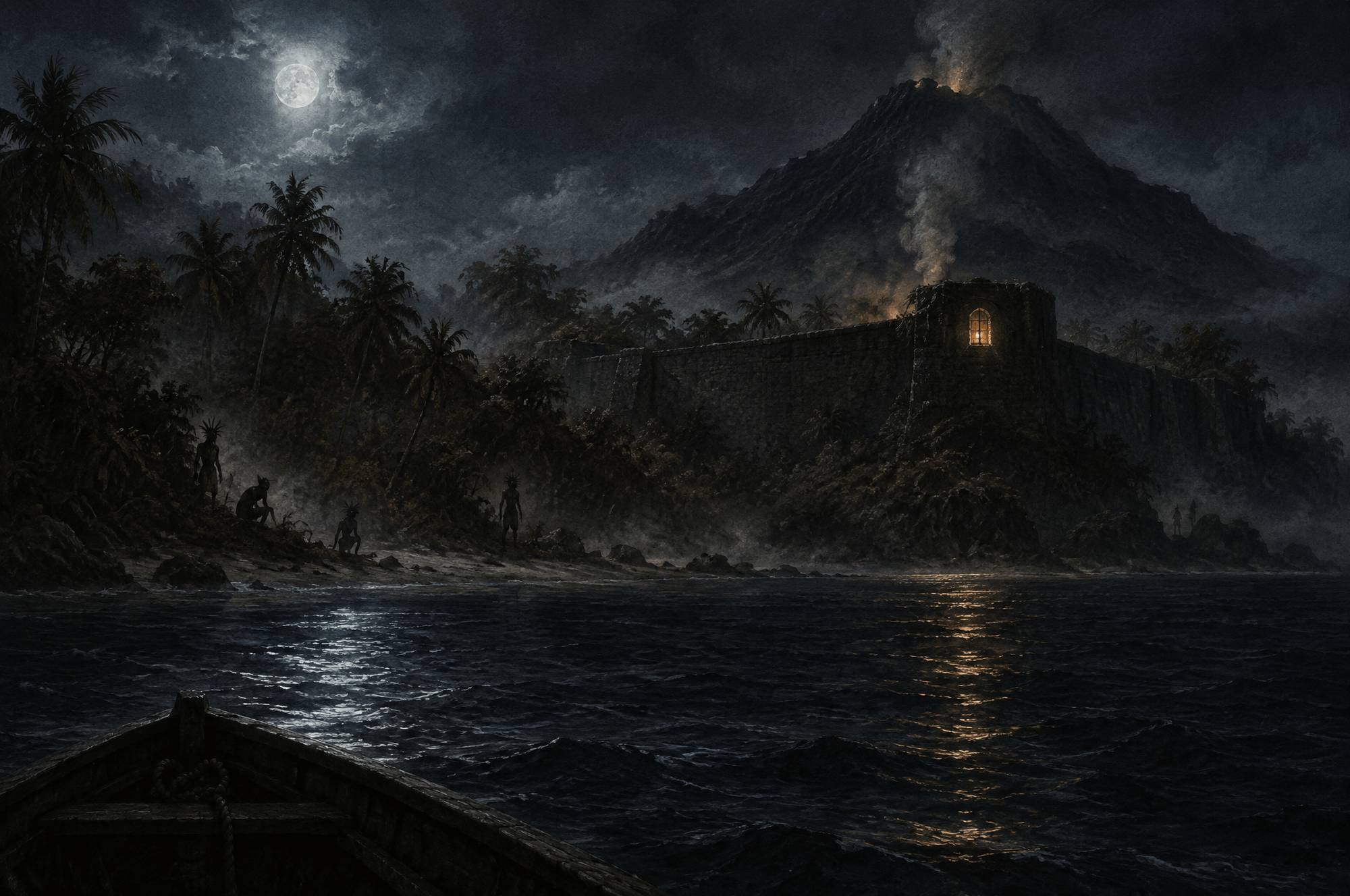
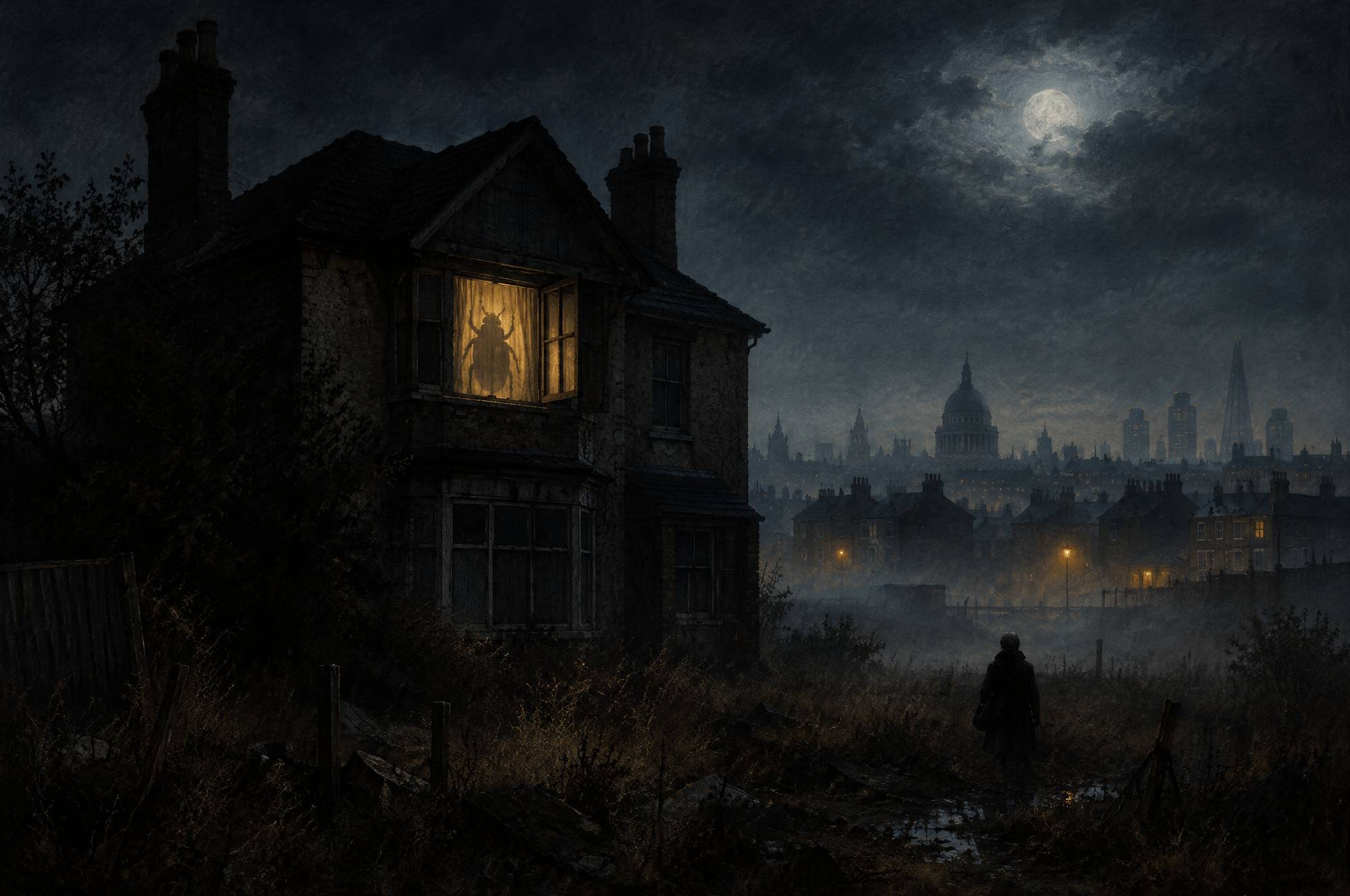
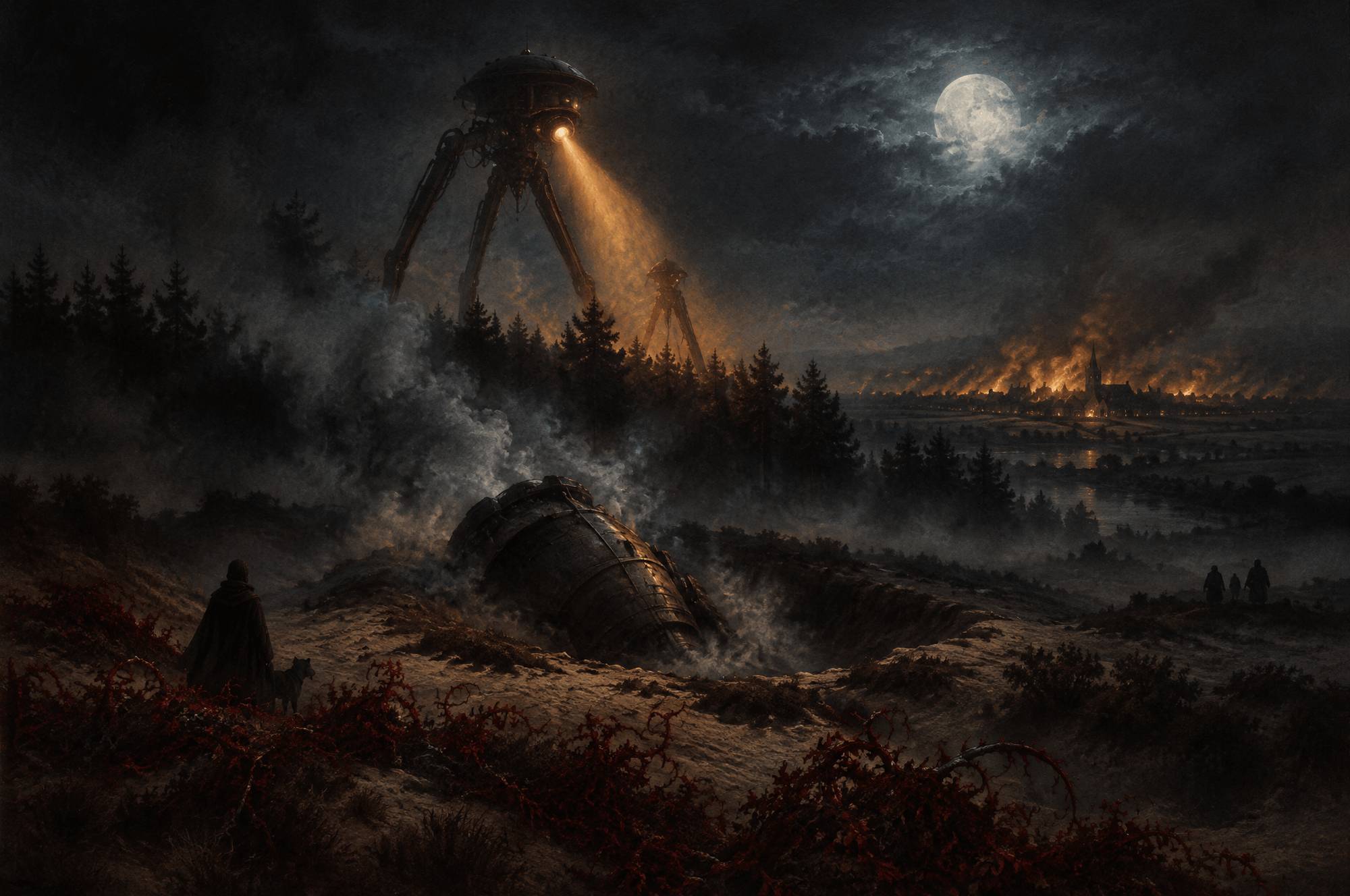
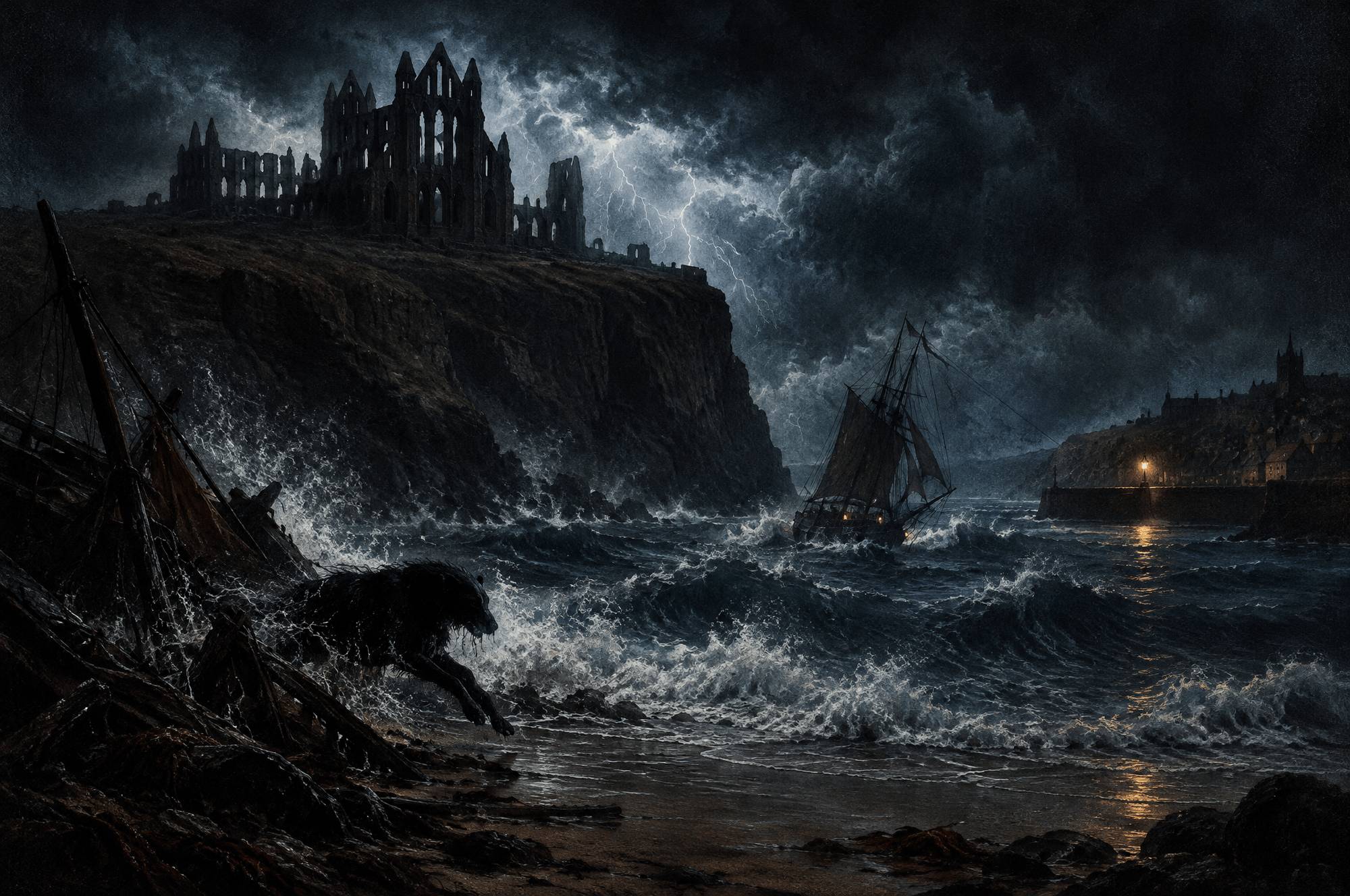
Thumbnails: Nocturne plates · illustration (AI-generated, 2026).
Alive at first appearance (Jan 1895)
Sources
- Wells, H G (Science Fiction Encyclopedia entry). The Encyclopedia of Science Fiction (SFE Ltd). Accessed 2026-10-09.
- The Time Machine (Project Gutenberg ebook #35). Project Gutenberg. Accessed 2026-10-09.