
Nocturne plate · illustration (AI-generated, 2026)
Full title: The Island of Doctor Moreau
Synopsis
Edward Prendick, a gentleman adrift after the wreck of the Lady Vain, is hauled aboard a ship carrying caged animals and a drunken captain, and is put ashore on a Pacific island run by a man named Moreau. Prendick half remembers the name from a vivisection scandal in London. Behind the compound walls he hears screaming at night, and in the forest he meets a population of stooped, muttering creatures who obey a chanted code. Moreau, working with his assistant Montgomery, has been carving beasts into the shape of men. Prendick works out what the island is for, and what keeps the creatures in line.
Not to go on all-fours; that is the Law. Are we not Men?
Facts
- The book opens with a note by Prendick’s nephew, who says the Lady Vain was lost on 1 February 1887 and that Prendick was found in an open boat on 5 January 1888, ‘eleven months and four days after’, with an account so strange that he was thought demented.[3]
- The Gale ‘Novels for Students’ entry, citing Robert Philmus, reports that late-19th-century reviewers rejected the book as blasphemous and gruesome and that most condemned the author’s ‘unhealthy obsessions’; Wells himself later called it a ‘theological grotesque’.[2]
- According to Philmus (as summarised by Gale), Wells’s early draft was modelled on Stevenson’s Strange Case of Dr Jekyll and Mr Hyde, and the revised version drew more on Swift’s Gulliver’s Travels.[2]
- The Science Fiction Encyclopedia notes that the novel incorporates ideas from Wells’s essay ‘The Limits of Individual Plasticity’ and shows a ‘veneer of civilization’ that proves thin.[1]
Setting
1887-1888, as given in the editor’s Introduction[3]
- Callao
- the Pacific Ocean
- an unnamed island in the South Pacific
Themes
Notes on dates 1 note on disputed dates and attribution
- Publication month of the Heinemann first edition: Wikipedia says 1 January 1896; Philmus (via the Gale entry on Encyclopedia.com) says June 1896; the SFE says only 1896. Only the year is shown.
Threads
Threads in
- A critic's reading links it to Frankenstein 1818
Roger Bowen (Studies in the Novel, 1976, as summarised by Gale) argues that Moreau descends from Mary Shelley’s Victor Frankenstein, with Wells updating the myth for the Darwinian age by replacing galvanism with biological science.[2]
Threads out
No sourced relation from a later work on this timeline is recorded.
Contemporaries
Works on the timeline that first appeared within three years of 1896, and the other writers alive when Island of Doctor Moreau appeared (ages computed from sourced dates).
-
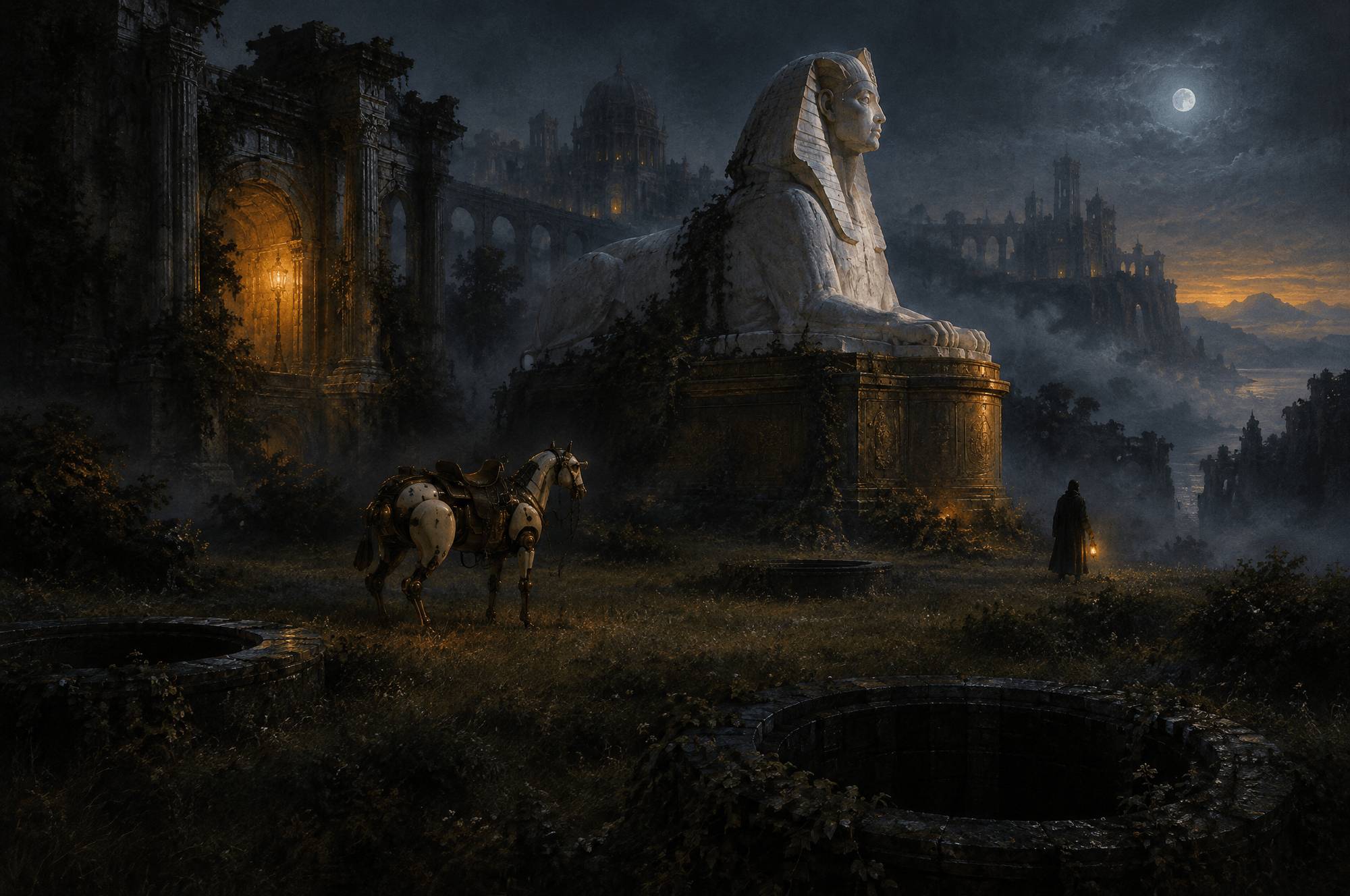
-
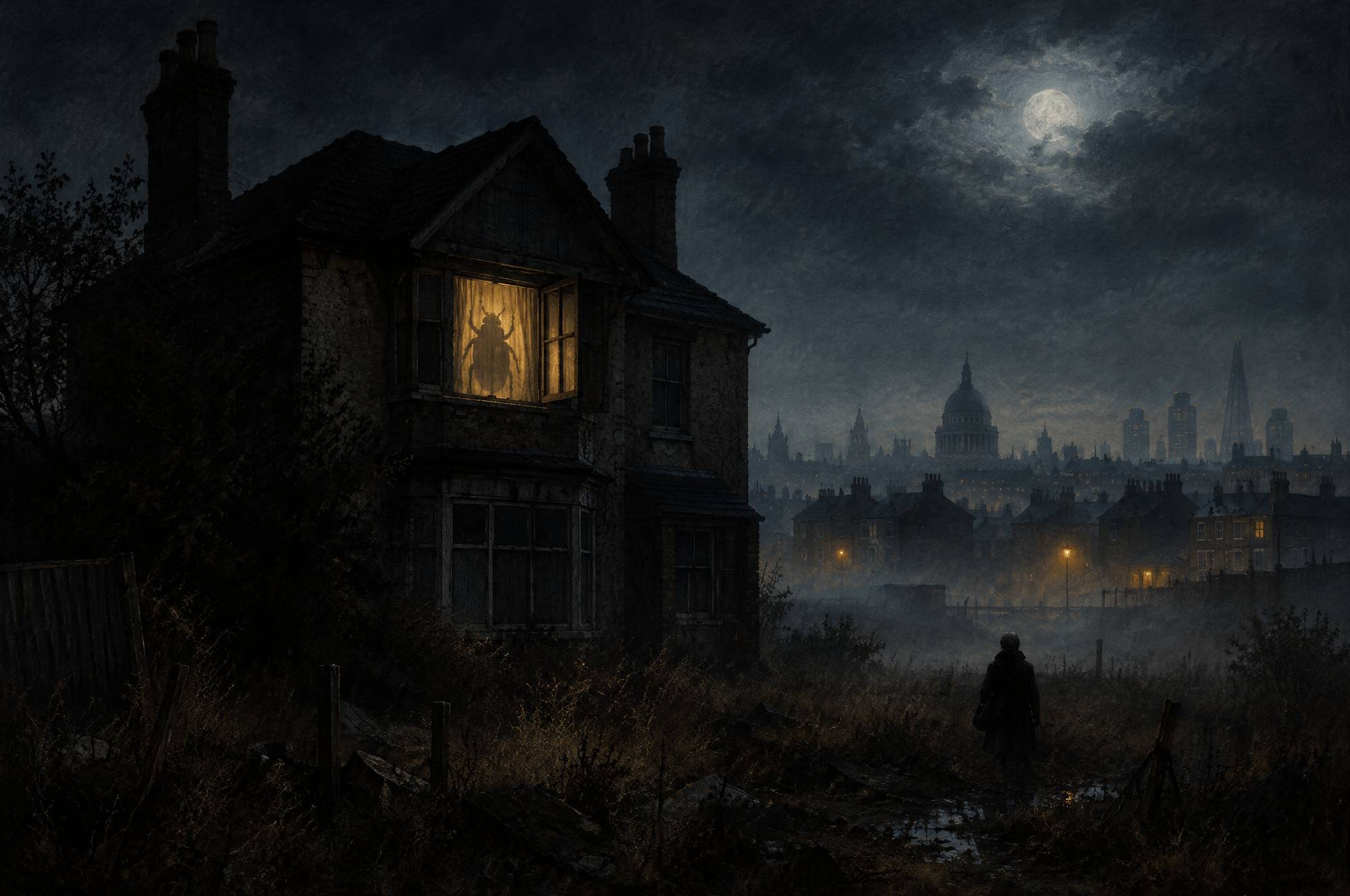
-
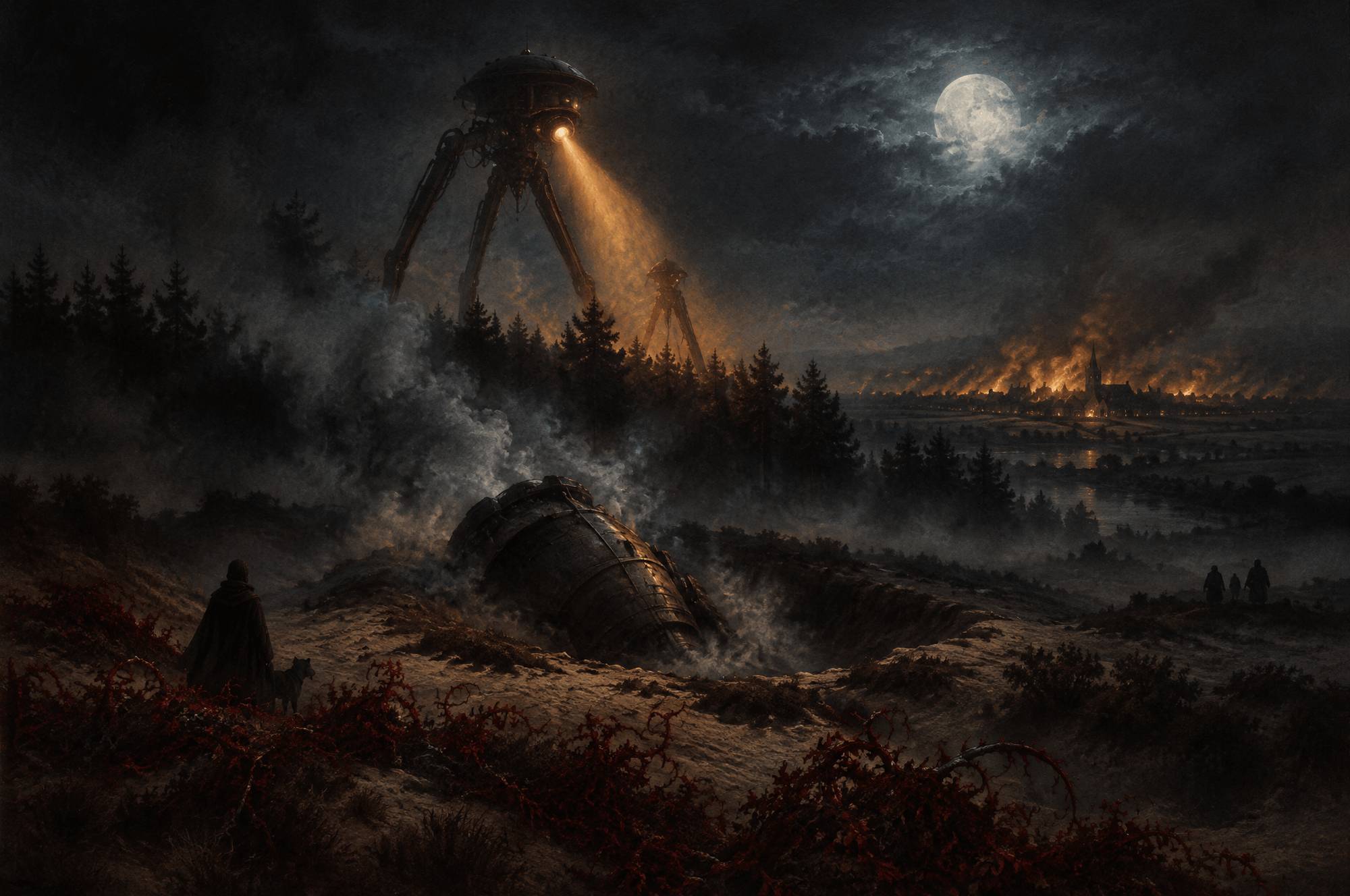
-
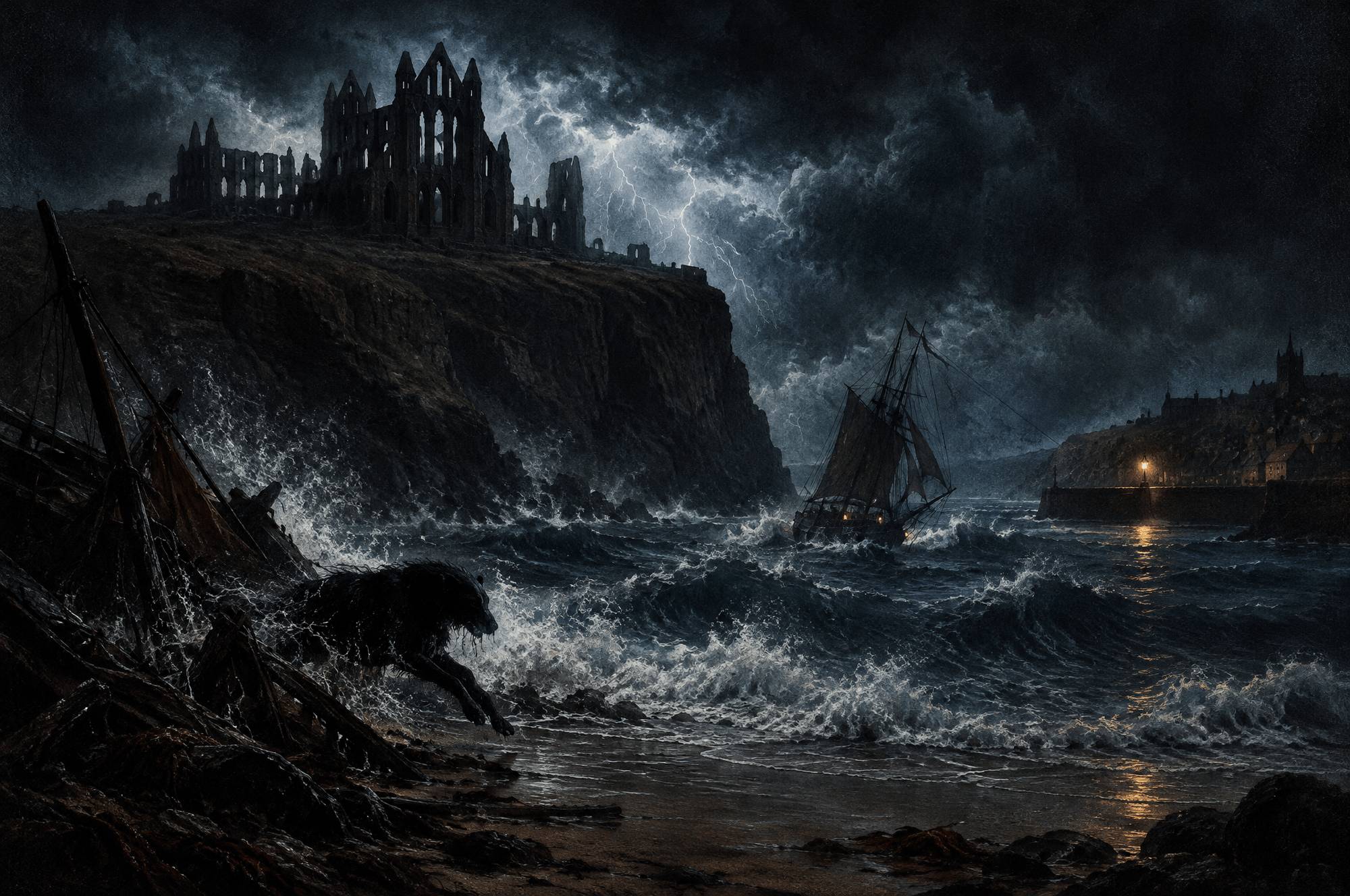
-
-
-
Thumbnails: Nocturne plates · illustration (AI-generated, 2026).
Alive at first appearance (1896)
Where a date is known only to the month or year, an age is given as the two values it could be.
- Arthur Conan Doyle 36 or 37
- Oscar Wilde 41 or 42
- Arthur Machen 32 or 33
- Richard Marsh 38 or 39
- Bram Stoker 48 or 49
- Henry James 52 or 53
- Joseph Conrad 38 or 39
- Gaston Leroux 27 or 28
Sources
- Wells, H G (Science Fiction Encyclopedia entry). The Encyclopedia of Science Fiction (SFE Ltd). Accessed 2026-10-09.
- The Island of Doctor Moreau (Gale 'Novels for Students' entry, citing Philmus, Bowen, Bergonzi). Encyclopedia.com / Gale. Accessed 2026-10-09.
- The Island of Doctor Moreau (Project Gutenberg ebook #159). Project Gutenberg. Accessed 2026-10-09.